Ever wondered how elite runners seem to glide effortlessly? Their secret might be in their stride. Optimizing your stride length can unlock new levels of running performance. This isn’t just for pros; you can improve too.
Stride length is the distance covered with each step. It’s measured from one foot’s landing to the same foot’s next landing. This metric plays a crucial role in running efficiency. A longer, more efficient stride can lead to faster times.
Optimal stride length isn’t about taking giant steps. It’s about finding the sweet spot. Too short, and you take too many steps, wasting energy. Too long, and you might overstride. Overstriding brakes your forward momentum and increases injury risk.
Researchers have extensively studied stride mechanics. A 2011 study in Medicine & Science in Sports & Exercise highlighted its impact. They found optimal stride length varies by individual. Factors like height, leg length, and speed all contribute.
What is Optimal Stride Length?
Optimal stride length maximizes efficiency. It minimizes energy expenditure per unit of distance. This means you run further with less effort. It’s a key component of sustainable running.
Finding your optimal stride is a personal journey. There’s no universal magical number. It’s about how your body moves most effectively. Think of it like finding your natural pace.
For example, imagine two runners. One shuffles with tiny steps. The other takes long, powerful but controlled strides. The second runner often covers more ground with less perceived effort. This highlights the power of good stride mechanics.
A 2017 review in the Journal of Sports Sciences emphasized this. It stated that individualizing stride training is essential. Blanket advice rarely works for everyone.
How Stride Length Affects Performance
Stride length directly impacts your speed. More ground covered per step translates to faster times. It also influences your running economy. Running economy is how much oxygen you use.
Improved running economy makes you more efficient. You can maintain a faster pace longer. This is critical for endurance events. Even short bursts of speed benefit.
Consider a 5K race. A runner with slightly more efficient strides will save energy. This saved energy can be used for a strong finish. Small improvements accumulate over distance.
The American College of Sports Medicine (ACSM) often discusses this. They stress the biomechanical advantage. Efficient strides reduce impact stress on joints. This can lower injury rates over time.
Assessing Your Current Stride
Before improving, you need to know where you stand. Several methods can help you assess your current stride. These methods range from simple to technologically advanced. Self-assessment is a great starting point.
Understanding your current stride provides a baseline. Without it, you can’t measure progress. It also helps identify potential issues. Are you overstriding or understriding?
Think of it like tuning a guitar. You need to know if it’s flat or sharp first. Then you can make adjustments. Your stride is no different.
Simple Self-Assessment Techniques
You can use a track or a long, flat stretch of road. Count your steps over a known distance. For example, count steps over 100 meters. Then divide 100 by your step count. This gives you an approximate step length.
Alternatively, measure your cadence. Cadence is steps per minute. Many running watches track this automatically. A lower cadence might suggest a longer stride. A higher cadence could mean a shorter one.
A useful drill: run on a dirt path. Look at your footprints. Are they far ahead of your body? This could indicate overstriding. Your foot should land close to your body’s center of gravity.
Gait analysis videos are also telling. Ask a friend to film you running. Watch in slow motion. Pay attention to where your foot lands. Is it beneath your hips?
The National Institutes of Health (NIH) provides guidelines. They emphasize observing natural movement. Don’t force a “perfect” stride during assessment.
Using Technology for Stride Analysis
Many modern running watches offer advanced metrics. GPS watches can track distance and speed accurately. Some even estimate stride length. These tools provide valuable real-time data.
Foot pod sensors can be even more precise. They attach to your shoe. These devices measure ground contact time and oscillation. They give a detailed picture of your gait cycle.
Labs offer professional gait analysis. They use motion capture technology. Specialized cameras track markers on your body. This provides highly accurate biomechanical data. This deep dive can reveal subtle inefficiencies.
While technology is great, remember its purpose. It’s a tool to inform, not to replace, your body’s feedback. Always listen to how your body feels.
Drills to Improve Stride Length

Specific drills can help you refine your stride. These exercises focus on strength, flexibility, and technique. Consistency is key for lasting change. Start slowly and build up.
Improving stride length isn’t just about running. It involves total body conditioning. Strengthen supporting muscles. Enhance your range of motion.
Imagine a finely tuned machine. Each part works in harmony. Your body is that machine. These drills help fine-tune it.
High Knees and Butt Kicks
High knees improve leg drive. Bring your knees high towards your chest. Maintain good posture. This mimics the knee drive needed for effective striding. Do 2-3 sets of 20-30 seconds.
Butt kicks focus on hamstring engagement. Your heel should aim towards your glutes. This emphasizes the recoil phase of your stride. It promotes a quicker leg turnover. Again, 2-3 sets of 20-30 seconds work well.
These drills increase leg power and responsiveness. They prime your muscles for running. Incorporate them into your warm-up routine.
The American Council on Exercise (ACE) advocates these drills. They are excellent for dynamic flexibility. They also activate key running muscles.
Skipping and Bounding
Skipping is a simple yet powerful drill. It teaches coordinated leg and arm movement. Focus on getting height and distance. Land softly and rebound quickly. This improves elastic strength.
Bounding takes skipping to the next level. It’s a more explosive movement. Push off forcefully, covering maximum ground. This builds power for longer strides. Do short sets, like 3-5 reps of 30-50 meters.
These drills enhance power output. They train your body to propel you forward. They’re great for developing a more dynamic stride.
The Journal of Strength and Conditioning Research often publishes studies. These studies confirm the benefits of plyometric drills. Bounding is a prime example of plyometric training.
Form Drills
Focus on posture during your runs. Stand tall, shoulders relaxed, core engaged. Imagine a string pulling you upwards. Good posture allows for a more open stride.
Arm swing is also crucial. Your arms drive your legs. Swing them forward and back, not across your body. Keep elbows bent at 90 degrees. A powerful arm swing aids propulsion.
Visualize your foot landing beneath your hips. This prevents overstriding. Think “light and quick” contact with the ground. Avoid “slapping” your feet.
These small adjustments make a big difference. They promote efficient movement patterns. Practice them during your easy runs.
USA Track & Field (USATF) often emphasizes form. They provide resources for proper running biomechanics. Correct form minimizes energy waste.
Strength Training for Stride Length
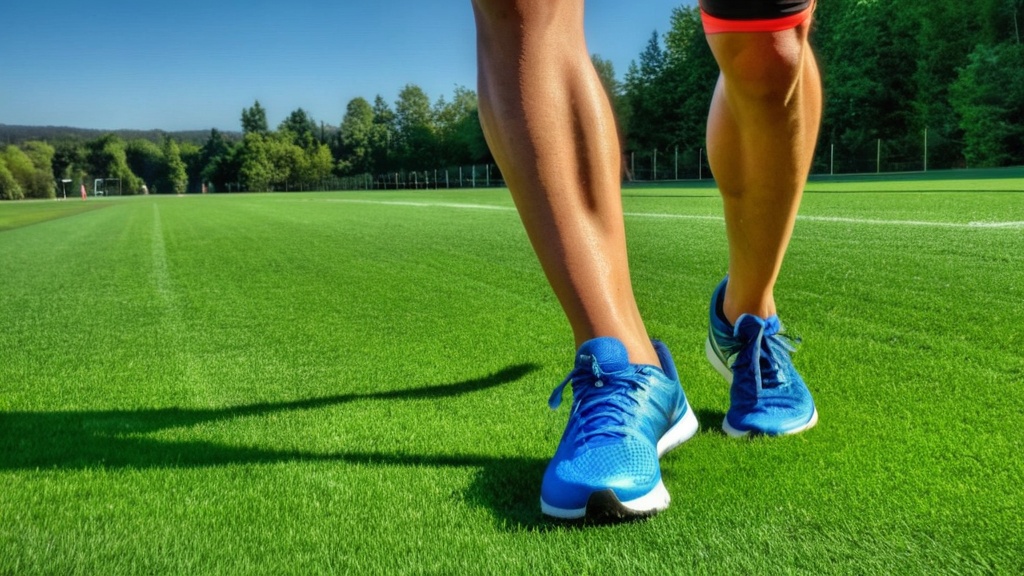
Stronger muscles support a more powerful stride. Focus on core, glute, and leg strength. These muscle groups are paramount for running. Consistent strength training complements your running.
Weakness in these areas can limit your stride. It can also increase injury risk. Think of strength training as building foundations. A strong foundation supports better performance.
This isn’t about becoming a bodybuilder. It’s about functional strength. Strength that translates to better running form and power.
Glute and Hamstring Exercises
Strong glutes power your push-off. They are essential for extending your hip. Try exercises like glute bridges and squats. Lunges are also excellent. Aim for 2-3 sets of 10-15 repetitions.
Hamstrings help with leg flexion and extension. They are vital for the swing phase. Romanian deadlifts and hamstring curls strengthen these. Focus on controlled movements. These exercises prevent common running injuries too.
A powerful posterior chain drives your stride. It’s where much of your running power comes from. Prioritize these muscles in your routine.
A 2015 study in the Journal of Orthopaedic & Sports Physical Therapy highlighted the importance of gluteal strength. It connects glute weakness to various running injuries.
Core Strength
A strong core stabilizes your pelvis and spine. This prevents excessive torso rotation. A stable core allows for efficient power transfer. Your arms and legs can move more effectively.
Planks, side planks, and bird-dog exercises are great. They build isometric strength. This strength is crucial for maintaining posture. Aim for holding planks for 30-60 seconds.
Without a strong core, your energy leaks. Imagine trying to run with a wobbly center. It makes efficient movement much harder.
The National Strength and Conditioning Association (NSCA) consistently recommends core training. They emphasize its role in athletic performance and injury prevention.
Plyometric Exercises
Plyometrics improve explosive power. They train your muscles to contract quickly. This translates to a more dynamic and responsive stride. Box jumps, broad jumps, and single-leg hops are examples.
Start with lower boxes for jumps. Focus on soft landings. This reduces impact and injury risk. Gradually increase height or intensity. Do 2-3 sets of 8-12 repetitions.
These exercises mimic the elastic recoil during running. They teach your body to store and release energy efficiently. This is key for a springier stride.
Research published in Sports Medicine supports plyometric training. It improves running economy and speed. Integrate them wisely into your routine.
Incorporating Stride Length Training into Your Schedule
| Training Metric |
Measurement |
| Initial Stride Length |
2.5 feet |
| Target Stride Length |
3 feet |
| Training Duration |
4 weeks |
| Frequency |
3 times per week |
| Progress |
Increased by 0.2 feet |
Integrate stride training thoughtfully. Don’t overhaul your entire routine at once. Gradual changes are more sustainable. Listen to your body and avoid overtraining.
Consistency is more important than intensity. Small, regular efforts yield big results. Mix drills with your regular runs.
Remember, rest and recovery are just as important. Your muscles need time to adapt and grow stronger. Don’t skip your rest days.
Dynamic Warm-up and Cool-down
Always start with a dynamic warm-up. This prepares your muscles for activity. Lunges, leg swings, and arm circles work well. Spend 5-10 minutes warming up.
End with a cool-down and stretching. Static stretches improve flexibility. Hold each stretch for 20-30 seconds. Focus on hamstrings, quads, and calves. This aids recovery and flexibility.
A flexible body moves more freely. It allows for a greater range of motion in your stride. This proactive approach prevents stiffness.
The ACSM recommends dynamic warm-ups for runners. They increase blood flow and muscle activation.
Integrating Drills into Runs
Add 10-15 minutes of drills before or after runs. For example, do high knees and butt kicks before a tempo run. Or perform bounding after an easy run. Choose drills that complement your run type.
During your easy runs, focus on form. Consciously try to land lightly. Keep your cadence in mind. Experiment with small changes.
Tempo runs are great for practicing a longer, more powerful stride. Maintain a challenging but sustainable pace. Focus on propelling yourself forward efficiently.
Interval training can also improve stride. During speed intervals, focus on maximizing each stride. Push for distance with each powerful step.
The key is intentional practice. Don’t just run; run with a purpose. Each run is an opportunity to refine your mechanics.
Gradual Progression
Start with short durations and low intensity. For example, incorporate drills for 5 minutes. Gradually increase duration or number of sets. Add a new drill every few weeks.
Avoid doing too much too soon. This can lead to fatigue or injury. Your body needs time to adapt to new stresses. Progress at a comfortable pace.
Track your progress over time. Notice improvements in speed or perceived effort. Celebrate small victories. This keeps you motivated.
A common mistake is rushing the process. Be patient and consistent. Sustainable improvement takes time and dedication.
FAQs
What is stride length training?
Stride length training is a form of exercise that focuses on increasing the distance covered with each step taken while walking, running, or sprinting. It involves specific drills and exercises aimed at improving the length of each stride.
What are the benefits of stride length training?
Stride length training can help improve running efficiency, speed, and overall performance. It can also help reduce the risk of injury by promoting proper running mechanics and muscle balance.
How can I incorporate stride length training into my workout routine?
Incorporating stride length training into your workout routine can be done through various drills and exercises such as high knees, bounding, and hill sprints. It is important to gradually incorporate these exercises and focus on proper form and technique.
Are there any risks associated with stride length training?
When done with proper form and technique, stride length training is generally safe. However, overdoing it or performing the exercises incorrectly can lead to muscle strains, joint pain, and other injuries. It is important to start slowly and gradually increase intensity.
Who can benefit from stride length training?
Anyone looking to improve their running performance, whether for recreational or competitive purposes, can benefit from stride length training. It can be particularly beneficial for athletes, sprinters, and distance runners looking to enhance their speed and efficiency.