Imagine a discus soaring through the air. It spins and glides. It covers an incredible distance. This isn’t magic. It’s precise technique and powerful physics. Mastering the discus throw unlocks athletic potential. Let’s explore how.
The discus launch is a symphony of forces. Spin creates lift. It stabilizes the discus. This spinning action is crucial for a long throw. Without it, the discus would tumble aimlessly.
Aerodynamics at Play
Airflow over the discus is key. The spinning motion forces air to move faster on one side. This creates lower pressure. Higher pressure on the other side pushes the discus upwards. This is the Magnus effect. You can see this on a spinning baseball too.
Spin Rate and Stability
A faster spin means more stability. Imagine a spinning top. It stays upright longer. A discus needs this stability. It allows it to cut through the air efficiently. A wobbly discus loses energy quickly.
Building a Powerful Foundation
A strong body is essential for discus throwing. Strength training builds the muscles needed. Explosive power comes from these muscles. It allows for maximum force generation.
Leg Power is Paramount
The legs are the powerhouse. They generate the initial momentum. Squats and lunges build leg strength. Plyometric exercises add explosiveness. Think jump squats.
Core Strength for Transfer
A strong core connects upper and lower body. It transfers power efficiently. Planks and Russian twists are excellent. They keep your body stable during the throw.
Mastering the Wind-Up
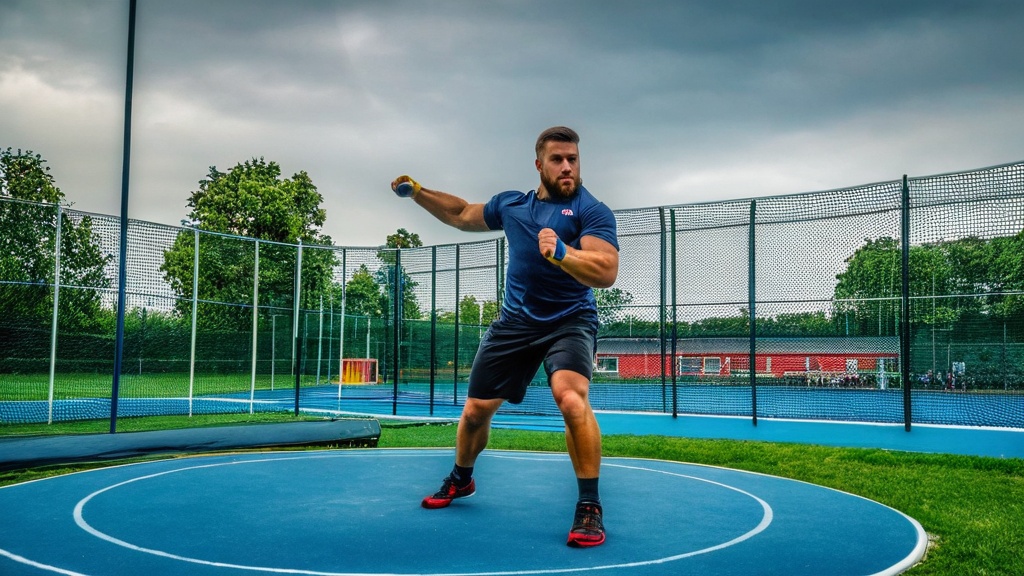
The wind-up prepares the body for the throw. It stores elastic energy. This energy is released explosively. It’s a controlled build-up of tension.
The Initial Stance
Stand balanced with feet apart. Your weight should be even. The discus is held in your palm. Fingers are spread for grip.
The Controlled Rotation
Begin a slow, controlled turn. Keep your eyes on your target. Your arms and shoulders start to move. The discus follows your body’s rotation.
Building Momentum
The rotation speeds up gradually. The discus circle is your playground. You gain speed with each turn. Don’t rush this phase.
The Explosive Release

This is the most critical moment. It’s a burst of speed and power. You must release the discus at the right angle. Timing is everything here.
Unleashing the Power
As you complete the turn, extend your arm. Drive through your legs. Your hips and torso rotate powerfully. The discus leaves your hand.
The Release Angle
The optimal release angle is about 35 degrees. This angle maximizes distance. Too high, it stalls. Too low, it hits the ground. Adjust this based on wind.
Follow-Through Matters
Don’t stop your motion after release. A good follow-through ensures full momentum transfer. It prevents injury too. Let your body naturally slow down.
Refining Your Technique
| Discus Technique Metrics |
Measurement |
| Throwing Distance |
Measured in meters or feet |
| Release Angle |
Measured in degrees |
| Speed of Rotation |
Measured in revolutions per minute (RPM) |
| Foot Placement |
Measured in relation to the throwing circle |
| Balance and Stability |
Measured by the athlete’s ability to maintain control during the throw |
Constant practice refines your throw. Video analysis helps identify flaws. Small adjustments make big differences. Seek feedback from experienced coaches.
Practice Drills
Focus on specific parts of the throw. Practice the wind-up without throwing. Then practice the release from a stationary position. Combine elements gradually.
Video Analysis
Record yourself throwing. Watch your technique critically. Compare it to professional throwers. Where can you improve?
Coaching and Feedback
A good coach offers invaluable insights. They see things you miss. They can correct bad habits. Listen to their advice carefully.
Advanced Throwing Concepts
Understanding drag and lift further improves your throw. Wind plays a significant role. Learning to use it can help.
The Disc’s Flight Path
The discus doesn’t fly straight. It arcs through the air. This arc is a balance of gravity and lift. You aim for a high, long arc.
Wind Assistance
A tailwind can help your throw. It pushes the discus further. However, too much wind can be disruptive. Learn to adjust your angle.
Wind Resistance
Headwinds slow the discus down. They increase drag. You might need to release the discus lower. This reduces the time it fights the wind.
Common Pitfalls to Avoid
Many athletes make similar mistakes. Awareness helps you correct them. Avoid these common errors.
Rushing the Throw
Speed is important, but control is paramount. Rushing leads to poor technique. It sacrifices power and accuracy. Slow down the wind-up.
Incorrect Weight Transfer
Your weight must shift forward. This generates powerful leg drive. If your weight stays back, you lose energy. Practice transferring your weight.
Poor Grip
A firm but relaxed grip is essential. Too tight a grip restricts your wrist. Too loose, and the discus might slip. Find your sweet spot.
Ignoring the Core
Your core is vital for power transfer. A weak core means lost energy. Prioritize core strengthening exercises.
The Mental Game of Throwing
The discus throw requires immense concentration. Focus and mental toughness are key. Develop a pre-throw routine.
Visualization
See yourself executing a perfect throw. Imagine the discus sailing far. Visualize success before you step into the circle.
Managing Nerves
Competition can be stressful. Practice deep breathing techniques. Stay calm and focused on your execution. Don’t let pressure dictate your performance.
Learning from Mistakes
Every throw is a learning opportunity. Don’t dwell on a bad throw. Analyze what went wrong. Then move on to the next attempt.
Building Your Discus Journey
Mastering the discus throw takes time. It requires dedication and perserverance. Celebrate small victories. Enjoy the process of improvement.
Consistency is Key
Regular practice builds muscle memory. Stick to a training schedule. Consistent effort yields consistent results.
Patience with Progress
Don’t expect overnight success. Improvement happens gradually. Trust your training. Keep working hard at each step.
Enjoy the Sport
Ultimately, have fun with discus throwing. Love the challenge. Love the feeling of a great throw. Passion fuels progress.
FAQs
What is the discus technique?
The discus technique refers to the specific set of movements and form used by athletes when throwing the discus in track and field events. It involves a series of steps and rotations to generate power and distance in the throw.
What are the key components of the discus technique?
The key components of the discus technique include the grip on the discus, the stance and footwork, the winding up motion, the release, and the follow-through. Each of these components is crucial for achieving a successful throw.
What are some common mistakes in discus technique?
Common mistakes in discus technique include improper grip on the discus, incorrect foot placement and stance, lack of proper rotation during the throw, and a weak follow-through. These mistakes can result in reduced distance and accuracy in the throw.
How can an athlete improve their discus technique?
Athletes can improve their discus technique through regular practice, working with a coach or experienced thrower for guidance, focusing on strength and conditioning exercises, and studying video footage of their throws to identify areas for improvement.
What are some drills to help with discus technique?
Drills to help with discus technique include standing throws to focus on proper release and follow-through, rotational drills to work on generating power through the rotation, and footwork drills to improve balance and positioning during the throw. These drills can help athletes refine their technique and improve their overall performance in the discus event.